Mekong Delta Weather by Month: A Year From Sóc Trăng
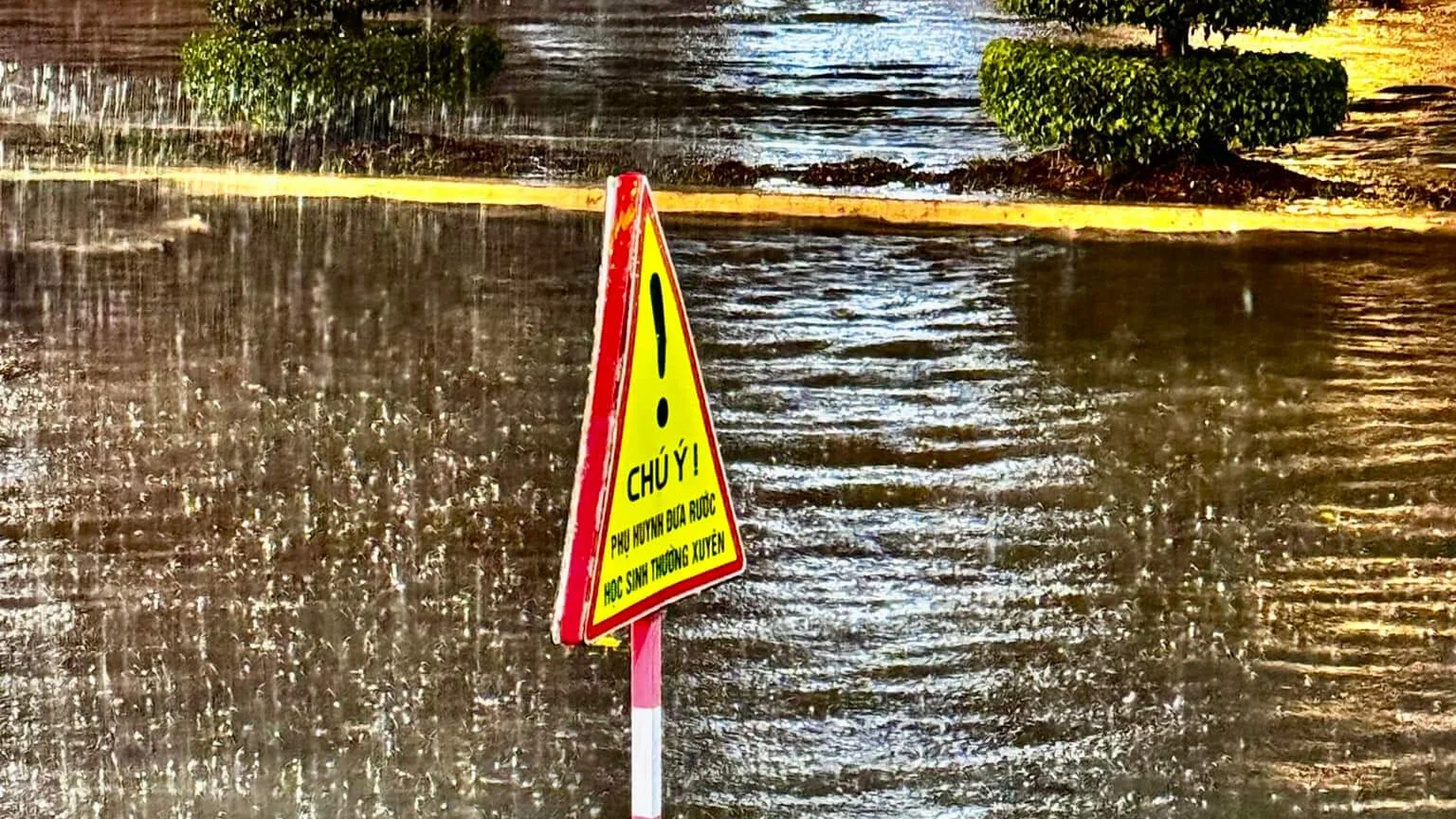
A few years ago I covered the roof over my back room with shade cloth, to soften the sound of the rain. When it comes down in the Mekong Delta, it comes down hard, loud enough on a tin roof to be unbearable, for about twenty minutes, and then it simply stops. On the last morning of September a thunderstorm did exactly that, and within the hour the street outside the language centre where I teach was a shallow brown river.
That’s the wet season in one scene. The rest of the year is easier to describe, and most of it is very pleasant. Here’s how the year actually runs down here, month by month, from someone who has lived through eight of them in Sóc Trăng.
The short answer
The Mekong Delta has two seasons. The dry season runs roughly from December to April, and the wet season from May to November. The edges blur. Last year we still had rain in the first week of December, so treat those dates as a rough guide.
If you want the easiest weather, come between December and the end of February. If you can handle humidity and an afternoon downpour, the wet season has its own beauty, and you’ll share it with very few other visitors.
The figures below are long-term averages for Cần Thơ, an hour or so up the road. Sóc Trăng’s pattern is very similar.
| Month | Average rain | Rainy days | How it feels | What’s on |
|---|---|---|---|---|
| January | 10 mm | 2 | Clear, dry, cooler nights | Star apple season |
| February | 4 mm | 1 | The driest month | Tết (6 February 2027) |
| March | 15 mm | 2 | Heat building | Mandarins, sapodilla |
| April | 42 mm | 6 | Hottest month, highs near 34°C | First durian |
| May | 223 mm | 16 | Humidity jumps, afternoon storms begin | Durian at its best |
| June | 310 mm | 20 | Wet season settles in | Mangosteen, rambutan |
| July | 336 mm | 22 | Daily downpours, clear mornings | Jackfruit, rambutan |
| August | 338 mm | 22 | Heavy rain, tidal flooding | Longan |
| September | 451 mm | 22 | The wettest month | Pomelo, longan |
| October | 301 mm | 22 | Still wet, flood season upstream | Dragon fruit, pomelo |
| November | 137 mm | 14 | Rains easing, Ok Om Bok | King oranges, guava |
| December | 42 mm | 7 | “Winter”: clear skies, humidity lifting | Citrus, late mangoes |
December to February: the clear months
A few years ago my parents wanted to visit me here. In the end they never made the trip, because of their age, but I’d already told them when to come: between December and the end of February. It was the closest thing I could offer to summer on the Garden Route, where I grew up. Hot and dry by day, with nights that can dip below twenty degrees.
December is what people here call winter. The skies clear, the light softens, and the humidity finally lifts, which after the wet season feels like taking off a heavy coat. January and February are the driest months of the year. This is the stretch I’d recommend to almost anyone.
The one thing that changes the picture is Tết, the Lunar New Year, which falls on 6 February in 2027. Sóc Trăng sits at the receiving end of the great Tết migration, when millions of people leave Saigon and the other big cities to go home to their families in the countryside. If you’re in Saigon over Tết, you’ll notice the traffic thin out to something almost calm. Down here, it’s the opposite: towns fill up with returning family.
Prices on the mainland don’t really go up for Tết. The bigger issue is that places close. Smaller cafés and restaurants might open only in the morning, or only from late afternoon, or shut for the big days entirely. I usually step out of it altogether and head to Côn Đảo or back to South Africa. On Côn Đảo over Tết 2026, the supermarket stayed closed for all five days I was there, but the little family-run tạp hóa shops kept their doors open, so nobody went hungry. I wrote about that trip in Tết on Two Wheels, and about the quieter art of stepping aside for Tết.
March and April: the heat builds
By March the dry season starts turning into heat, and April is the hottest month of the year, with afternoon highs close to 34°C. Being South African, I’m no stranger to heat, and dry heat like this I handle fine. It’s the humidity that arrives with the rains that still gets me.
This is also the end of the dry season for the river. In the driest years, seawater pushes further up the Delta’s channels than it used to, and farmers have had to change crops, or give up on fields that were never salty before. I touched on why in Why Is the Mekong River Brown, and Why Is It Fading?.
April has one consolation: the first local durian starts appearing at the markets.
May and June: the changeover
You feel the wet season before you see it. The humidity rises sharply, the wind picks up, and the mornings stay clear while big, beautiful clouds build through the afternoon. Then one day the first real storm comes through, and the year has turned.
People don’t change much about how they live, but houses get ready. I had to make a plan for my back door, to stop flood water running into the house, and the shade cloth went up over the roof soon after.
May is also the heart of durian season in the Delta. If someone asks me what month durian season is, my honest answer is May, and I’ve written about choosing and eating the local Ri6 in Confessions of a Durian Lover.
July to September: the heart of the wet season
This is the stretch most travel advice tells you to avoid, and I’d soften that. There is real beauty in it. The afternoon clouds are spectacular, and the air after a downpour is washed clean in a way the dry season never quite manages.
The rain also keeps a fairly reliable schedule. Most days, mornings are clear and the downpour arrives in the early afternoon. This September it has usually come between one and two o’clock, with the odd morning storm thrown in. You learn to plan around it: get out early, find a café with a good awning around lunchtime, and carry on once it passes.
September is the wettest month, with around 450 mm of rain on average. Flooding in Sóc Trăng city happens mainly when a heavy downpour lands at the same time as a spring high tide, because the Maspero River running through town is tidal and has nowhere to send the extra water. I’ve written about how that works, and which streets go under first, in Rainy Season in Sóc Trăng.
The only thing I’d really warn visitors about is the humidity. It’s heavy and constant, and it took me a few years to handle it properly. Anyone who can afford it has air-conditioning, at least in the bedroom, and no house is without electric fans. Book somewhere with good air-con, and you’ll be fine.
October and November: the last rains, flood season and Ok Om Bok
October is still properly wet, and November is when the rain starts to ease off.
This is also flood season upstream. In the upper Delta near the Cambodian border, around An Giang and Đồng Tháp, the river rises over the fields from roughly August to November. People call it mùa nước nổi, the floating-water season. I don’t live with that kind of flooding down here on the tidal end of the river, so I’ll leave that story to the people who do.
What I do have in November is Ok Om Bok, the Khmer moon festival, with the ngo boat races on the Maspero. In 2026 the main day should fall around 23 November (it follows the lunar calendar, so check local announcements closer to the time). Last year I went to two race days. The first was a little rainy. The second had no rain at all and was boiling hot, which is about as November as it gets.
Sadly, Ok Om Bok draws very few foreign visitors, but it’s hugely popular with the Khmer communities across the Mekong. There are enough hotels in Sóc Trăng city to stay for the night, or you can do it as a day trip from Cần Thơ. There’s a grandstand on one side of the river. The other side is free, but it’s packed and the view is poor, and you should keep your belongings tucked away, as there have been reports of pickpockets. Grandstand tickets aren’t expensive, so ask your guide or hotel about seats. The full story is in my local’s guide to Ok Om Bok.
What to pack, season by season
Leave behind: hoodies and jackets. Even December nights don’t need them in the Delta.
Bring: sandals. I seldom wear my sneakers here, except for the odd evening out, and sandals don’t mind a flooded street. A waterproof backpack is worth having if you’ll be out on excursions in the wet months.
Buy here: a raincoat or poncho. They’re cheap and sold practically everywhere, so there’s no point packing one.
Any time of year: an umbrella. You’ll use it for the sun as often as the rain.
Fruit through the year
Thanks to off-season farming, a lot of Delta fruit is around for much of the year, but the big harvest runs from about May to August. As a rough guide:
- January to March: star apple (vú sữa) is at its best, milky and sweet, and rarely exported. Early mangoes, sapodilla and mandarins too.
- April to July: durian, mangosteen, rambutan and jackfruit. This is when orchards around the old Bến Tre and Vĩnh Long areas open up for fruit picking.
- August to October: longan, green-skinned pomelo, watermelon and dragon fruit.
- November and December: king oranges (cam sành), guava, soursop and a second crop of mangoes.
- Year-round: coconut, papaya, banana, guava, dragon fruit and wax apple (mận).
The rest of Vietnam runs on a different calendar
Everything above applies to the Delta, and it’s worth knowing that Vietnam’s regions keep different seasons.
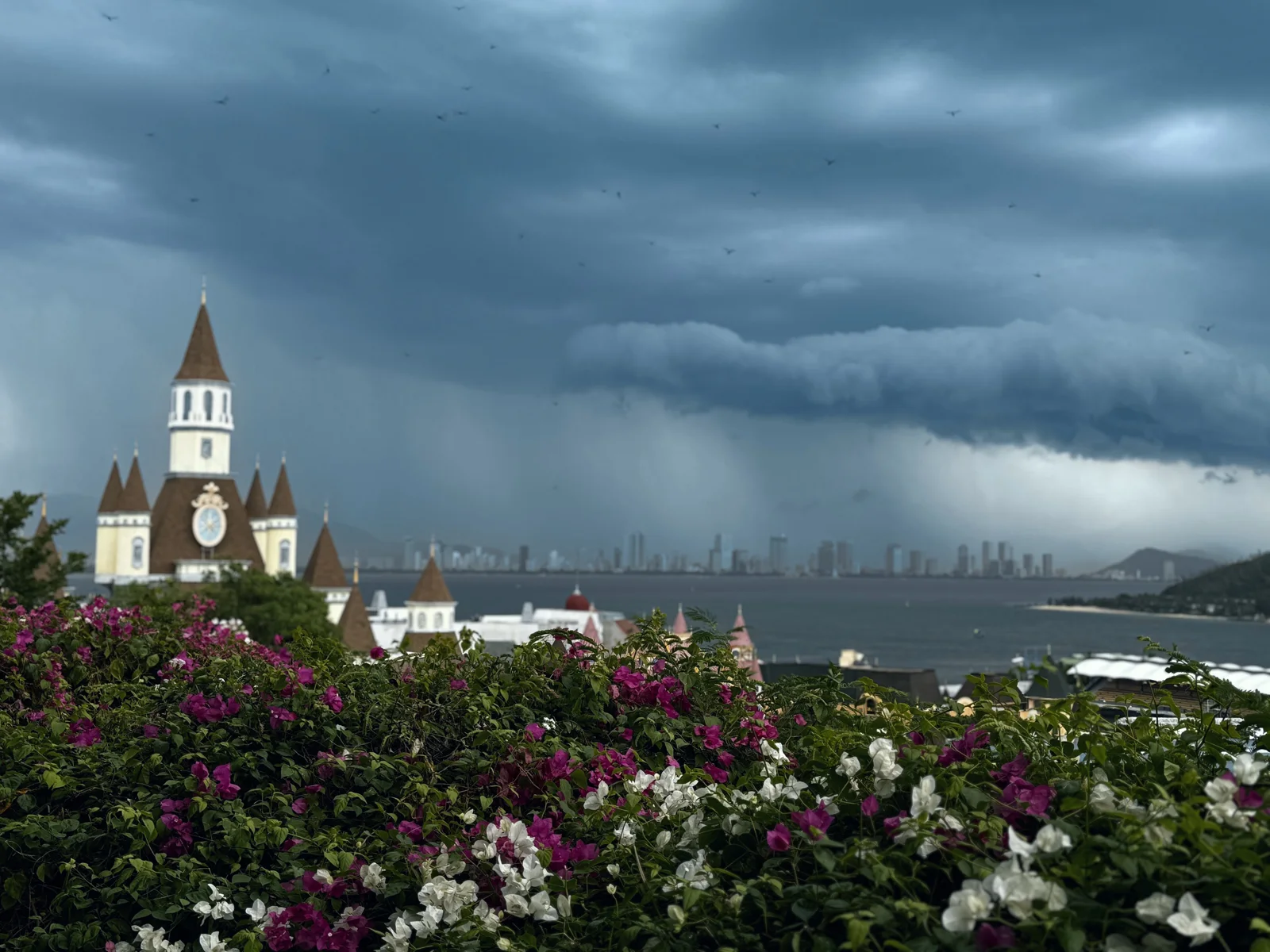
The central coast is almost the reverse of us. Nha Trang’s rainy season runs from about September to December, with November the wettest month, so if you’re heading there from the Delta in the wet months, you’ll often find it drier. That doesn’t make it storm-proof. I took the photo below from VinWonders in July, looking back towards the city, as a storm rolled in over the bay.
Đà Lạt is different again. It has none of the Delta’s humidity and is much colder, especially at night, which is a large part of why it’s the Delta’s favourite escape.
Mekong Delta weather FAQ
What is the best month to visit the Mekong Delta?
For the easiest weather, January or February: dry, clear and slightly cooler. December is a close second. Just plan around Tết closures if your dates fall near it.
Is it worth visiting the Mekong Delta in the rainy season?
Yes, if you can handle humidity. Mornings are usually clear, the rain tends to come in short, heavy afternoon bursts, and the countryside is at its greenest. Plan outdoor things early in the day.
Does the Mekong Delta flood?
Towns like Sóc Trăng get short-lived street flooding when heavy rain meets a spring high tide, usually between August and October. The bigger seasonal flood, mùa nước nổi, happens in the upper Delta near Cambodia from roughly August to November.
When is the dry season in the Mekong Delta?
Roughly December to April. February is the driest month, and April the hottest.
What should I wear in the Mekong Delta?
Light, breathable clothes and sandals all year. Buy a cheap raincoat locally for the wet months, and carry an umbrella for both sun and rain.