
The Saffron Delta: Khmer Culture That Never Left
Discover Sóc Trăng, Vietnam's 'Saffron Delta.' A photographer's guide to the Khmer culture of the Mekong, featuring the best pagodas, local food spots, and travel tips."
CULTURECULTURAL TRAVEL
Hein Lombard
12/29/20257 min read
At a Glance: Sóc Trăng, Vietnam
Vibe: Laidback, spiritual, quiet, and deeply Khmer.
Best For: Photographers, culture seekers, and foodies.
Time Needed: 2 Days / 1 Night.
Getting There: Approx. 5 hours from HCMC (Futa Bus).
In April 2018, I crossed the border at Móc Bài, leaving Cambodia behind for the noise and neon of Ho Chi Minh City. Or at least, I thought I had left it behind.
Three months later, suffocating under Saigon's relentless hustle, I did something reckless. I accepted a teaching position in a place called Sóc Trăng. I couldn't even find it on a map without zooming in twice. But I was desperate for air, for space, for something that wasn't another motorbike horn at 2 AM. So I packed my bags, showed up at the Western Bus Station, and climbed onto a Phương Trang sleeper bus heading into the unknown.
As we pushed further south, something started to shift outside my window.
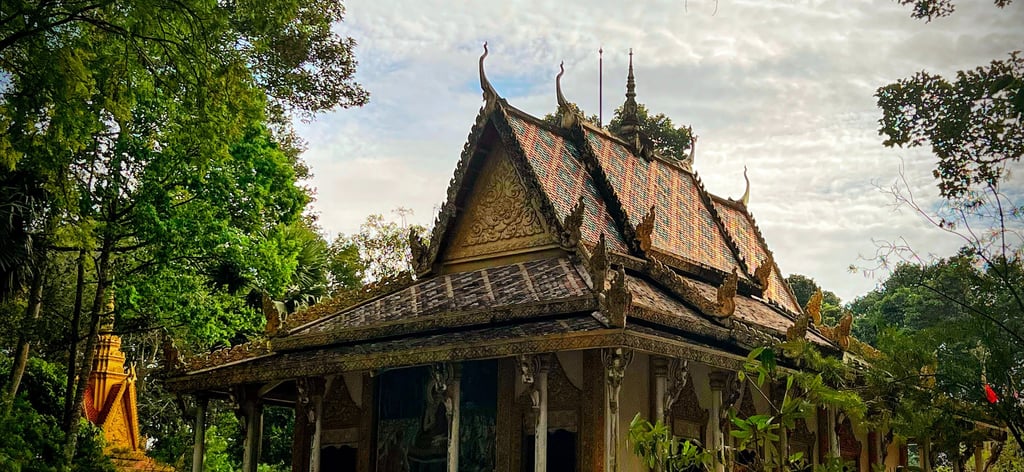
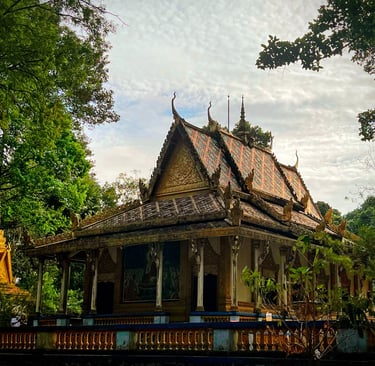
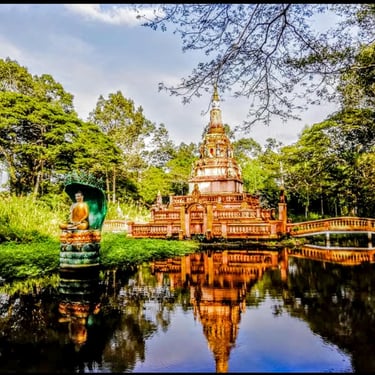
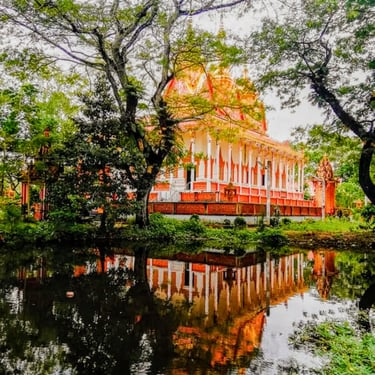
The grey and brown robes of Vietnamese monks vanished. In their place: flashes of brilliant saffron orange. The curved dragon roofs I'd grown used to faded into the distance, replaced by sharp, golden spires that looked like they'd been lifted straight out of Siem Reap. For a genuinely confused moment, I thought maybe I'd gotten on the wrong bus. Maybe I was accidentally heading back to Cambodia.
I wasn't. I was entering Kampuchea Krom: the "Lower Cambodia."
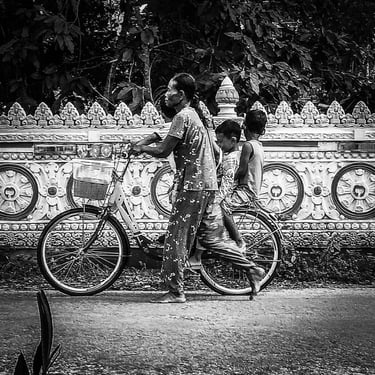
Politics draws lines on maps, but culture doesn't care about borders. It lives in the soil, in the language spoken by grandparents at home. Here in the Mekong, the Khmer people didn't migrate to Vietnam. The borders moved around them. What remains is something rare and beautiful: a culture within a culture, a living remnant of the ancient Khmer Empire thriving quietly in modern Vietnam.
The Golden Ratio
You want to understand the difference between Viet and Khmer culture here? Look up.
Sóc Trăng has over 200 pagodas crammed into a relatively small province. But here's the thing that stopped me cold when I first learned it: 92 of them are Khmer, nearly half.
That means as you cycle through the countryside, the landscape isn't just dotted with temples. It's punctuated by almost a hundred brilliant gold exclamation points, each one a defiant reminder that this land remembers who lived here first.
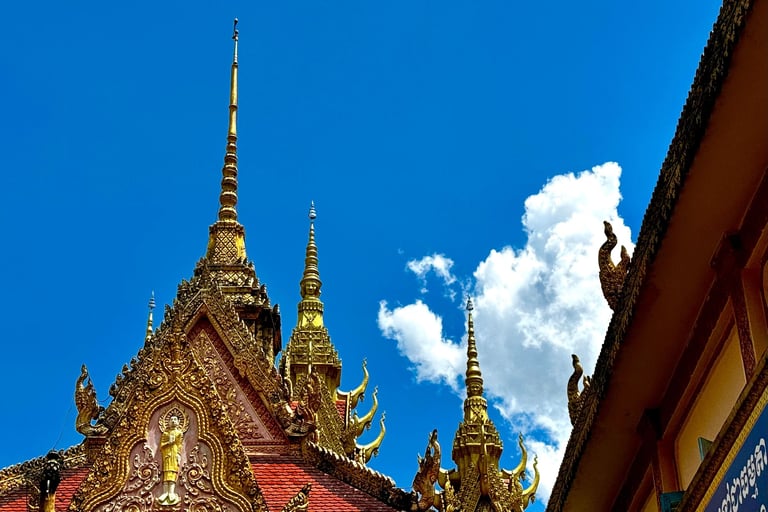
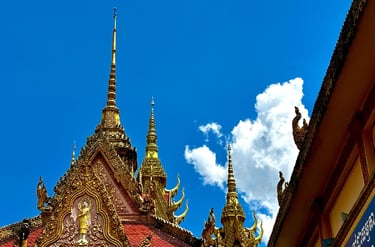
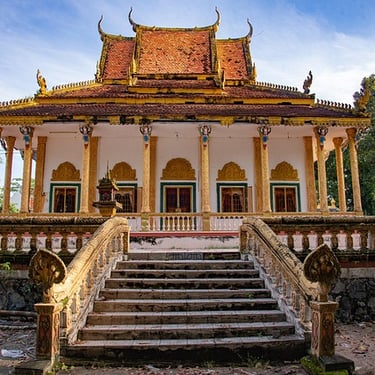
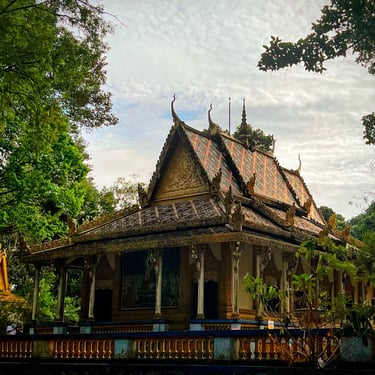
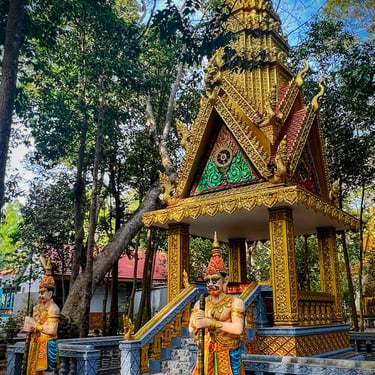
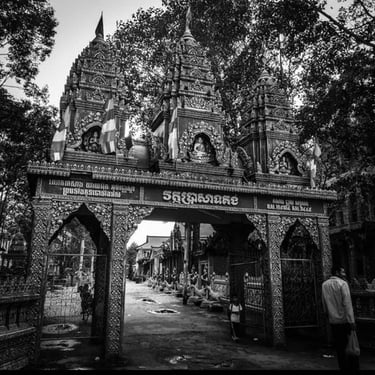
Living in Saigon, I had gotten used to seeing temples guarded by Dragons, those powerful, weather-controlling creatures borrowed from Chinese mythology. But the first time I turned the corner to Khleang Pagoda, the Dragons disappeared. In their place: Nagas. Seven-headed cobras rising out of Hindu-Buddhist mythology like they owned the place.
The architecture here doesn't whisper. It announces itself. Those stupa towers rise sharp and unapologetic, drawing a direct line back to Angkor Wat. Through my viewfinder, the contrast hit me every time: the chaotic, motor-scooter chaos of a Vietnamese street crashing up against the serene, timeless geometry of a Khmer sanctuary. Two worlds occupying the same space, neither one willing to budge.
The Boys in Orange
In the West, and even in Vietnam's Mahayana tradition, becoming a monk means leaving the world behind. It's a lifetime commitment, a door that closes behind you.
But for the Khmer Krom, the pagoda isn't an escape from life. It's a school for living.
I knew this in theory, the way you know things you've only read about. But it became real when one of my closest Khmer friends traded his jeans and t-shirt for saffron robes.
He didn't disappear into some mountain retreat. He was still here, still in Sóc Trăng, but different. One week we were grabbing coffee and complaining about work. The next, he was waking up at 4 AM to study Pali script and Khmer literacy, subjects that are quietly vanishing from the outside world. Because there's a crisis happening here. A slow, quiet one that doesn't make headlines.
The older generation speaks Khmer fluently. They dream in it. But the youth? They're drifting. Vietnamese is the everyday language of survival and life beyond home: it's what you need to pass exams, land a job in the city, navigate the world beyond the village. So now you have an entire generation of Khmer kids who can maybe speak their mother tongue at the dinner table but can't read a single word of it. They're becoming illiterate in their own history, cut off from the stories their grandparents carry.
That's why the pagoda matters. It's not just a spiritual space. It's the last line of defense, the place where young men can still learn to read the script on ancient temple walls, where the language gets passed down before it disappears entirely.
My friend wasn't just earning merit for his parents. He was learning to read his own past.
Walk into any Khmer pagoda in Sóc Trăng around 5 PM and you'll see it everywhere. The sound of laughter echoing off ancient walls. Teenage novices in saffron robes playing soccer in the courtyard, checking their phones between prayers, studying blackboards covered in script that looks like art. They're keeping a language alive in a country that speaks something else. They're holding onto something that refuses to fade.
The Taste of Unity: Bún Nước Lèo
History gets complicated, messy, political. But food? Food tells the truth.
The Mekong Delta is famous for its sweetness, but that's not the whole story. The real depth, the soul of this region, comes from the Khmer influence. It's not just fish sauce (nước mắm) flavoring everything here. It's Prahok: that pungent, fermented fish paste that hits you in the face and makes you understand exactly where you are.
The perfect symbol of this cultural fusion is Bún Nước Lèo.
On paper, it shouldn't work. A Khmer broth base (lemongrass, prahok, snakehead fish) meets Vietnamese roast pork, topped with a garden's worth of fresh herbs. But sitting on a plastic stool at 11 AM, sweat dripping down my back, chopsticks in hand—I realized I wasn't just eating lunch. I was tasting three hundred years of two cultures learning to share the same bowl. It's a humble dish that carries more history than most museums.
Very important!
Photograph with respect
Ask first. Monks are often camera-shy, some reserved, others playfully evasive, especially younger novices. Never photograph without establishing a connection.
Seek permission. Speak with the Head Monk before photographing the grounds. This gesture of respect often opens doors that would otherwise stay closed.
Bring a bridge. A local guide or English-speaking monk transforms you from intruder to invited guest.
Offer a gift. Fresh fruit is often appropriate, but ask your guide what suits that particular pagoda.
Dress properly. Cover shoulders and knees. This is a place of worship, not a studio.
The Sóc Trăng Field Guide: Where to Find the Khmer Soul
Skip the day tours. Stay the night. Let the place settle into you.
1. Khleang Pagoda (The Roots)
The Story: Over 500 years old. This is the grandfather pagoda, the spiritual headquarters where everything began.
Best Time to Shoot: 08:30 – 09:30 AM.
Why: The morning light is forgiving, soft. This is when the novice monks study in the open-air corridors, their young faces bent over ancient texts. It's quiet. Respectful. The kind of moment that demands you put the camera down for a few breaths before you even think about raising it.
Location: 53 Tôn Đức Thắng, Ward 6.
2. Chùa Dơi / Bat Pagoda (The Nature)
The Story: A national heritage site. Hundreds of fruit bats hang in the trees behind the temple like some kind of gothic fever dream. Sadly their numbers have decreased over the years, but that's a story for another time.
Best Time to Shoot: 05:00 – 06:00 PM (Golden Hour).
Why: During the day, they're just black shapes sleeping. But at dusk? They wake up. They fly. And that late afternoon sun hitting the saffron robes and gold stupas while hundreds of bats spiral into the sky creates a color contrast that'll ruin you for every other sunset.
Location: Văn Ngọc Chính, Ward 3.
3. Som Rong Pagoda (The Scale)
The Story: The modern face of Khmer Buddhism. A giant reclining Buddha (63 meters long) that rivals anything you'd find in Thailand.
Photo Tip: The scale is almost impossible to capture. Walk to the far end of the courtyard, use your widest lens, and frame a monk walking in the foreground. You need that human scale against the massive Buddha, or your photo will just look like a pile of gold.
Location: 367 Tôn Đức Thắng, Ward 5.
Where to Eat: Bún Nước Lèo Cây Nhãn
Don't leave without tasting unity in a bowl.
Where: Võ Đình Sâm Street (look for the old Longan tree, you can't miss it).
The Order: "Một tô đầy đủ" (One full bowl).
Insider Tip: That jar of roasted chili (ớt nướng) on the table? Don't be scared of it. It's smoky first, spicy second, and it cuts through the richness of the fish broth in a way that'll make you understand why people have been eating this dish for generations.
Plan Your Trip
Getting There
The easiest route is by bus from Ho Chi Minh City (Mien Tay Bus Station).
Operator: Phương Trang (Futa Bus)-reliable, cheap, comfortable enough.
Duration: 4 to 5 hours.
Cost: Approx. 165,000 VND ($7 USD).
Where to Stay
Sóc Trăng isn't a tourist hub, which means accommodation is refreshingly affordable. Stay near the central market for easy access to food and pagodas.
Bat Pagoda, Soc Trang City
Khmer Pagoda, Mekong Delta, Vietnam
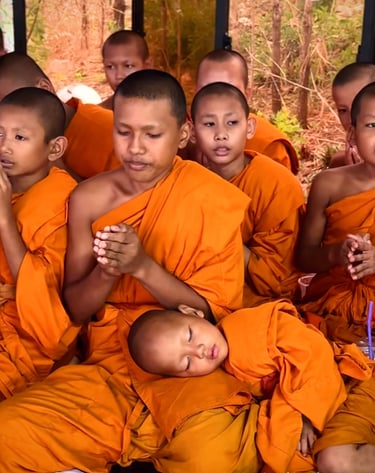
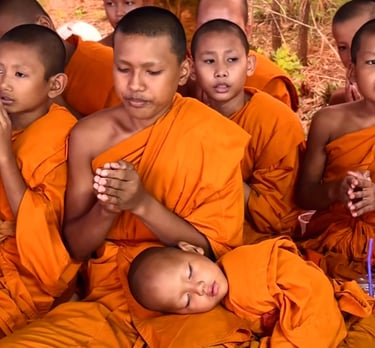
Khmer Buddhist monks
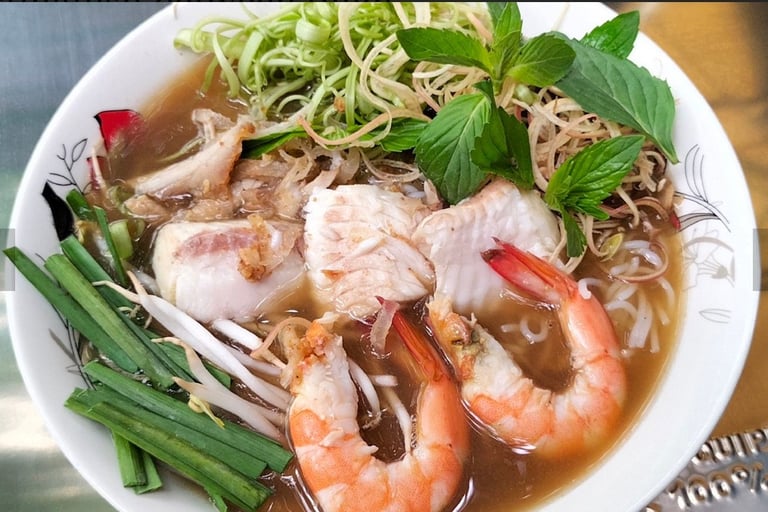
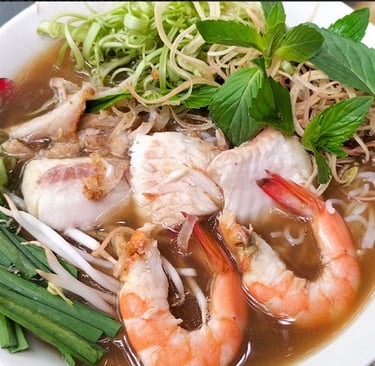
Bún nước lèo
© 2025. All rights reserved.
hello@gonomadnest.com